The Margins Have Mutinied: Books Where the Fine Print Staged a Full Hostile Takeover

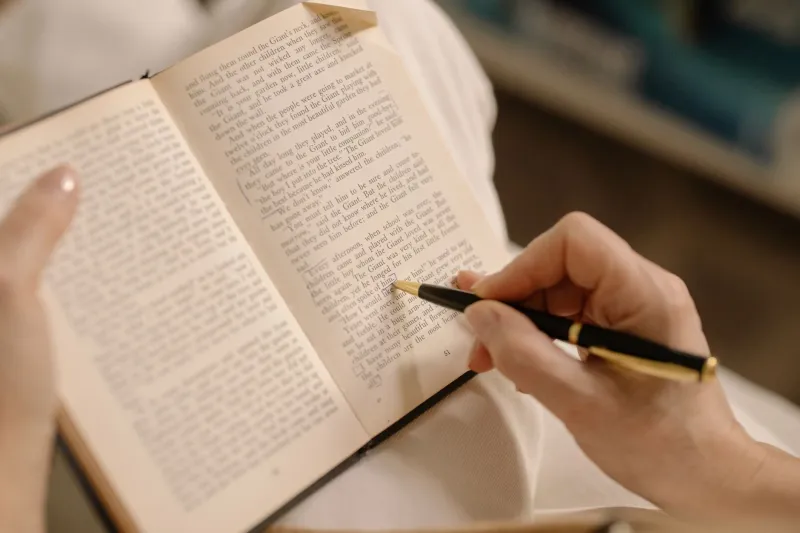
Here's a scenario that should be impossible: you're reading a novel, cruising along through the main narrative, when a tiny superscript number catches your eye. You glance down at the footnote. You read it. You read it again. And somewhere around the third paragraph of what was supposed to be a minor clarification, you realize with dawning horror that the footnote is better than the book.
Not a little better. Embarrassingly, aggressively, audaciously better.
This is not an accident. A certain breed of author — mischievous, probably sleep-deprived, definitely chaotic — has figured out that readers will follow literary breadcrumbs into the most obscure corners of a text if you make those corners interesting enough. The result is a growing canon of books where the margins have effectively staged a coup, and the main narrative is left standing there holding its outline like a middle manager who just got outperformed by the intern.
Welcome to the footnote rebellion. Pull up a chair in the margins.
The Godfather of Marginalia Mayhem
No conversation about books that weaponize their own architecture can happen without a respectful, slightly unnerved nod toward House of Leaves by Mark Z. Danielewski. Published in 2000 and still giving readers existential hangovers, this novel operates on at least three simultaneous narrative layers — a found manuscript, an editor's annotations, and footnotes that eventually develop their own emotional arc and, in some sections, their own footnotes.
The physical layout of the book changes depending on whose voice you're reading. Some pages have a single sentence floating in the center of an otherwise blank expanse. Others have text running sideways, upside down, or spiraling in ways that make your neck hurt and your brain short-circuit. Danielewski isn't just telling a story about a house with impossible interior dimensions — he's built a book with impossible interior dimensions. The medium is the message, and the message is: good luck.
What makes House of Leaves so diabolically effective is that the supplementary material isn't decoration. The editor's footnotes, the appendices, the index — they're load-bearing walls. Remove them and the whole structure collapses. The "main" narrative needs the margins the way a magician needs a distraction. You're never quite sure which hand to watch.
When the Author's Note Becomes the Main Event
Sometimes the rebellion happens in quieter, sneakier ways. Terry Pratchett's Discworld novels are famous for their footnotes, which operate less as citations and more as a parallel comedy track running beneath the main story. Pratchett's footnotes crack jokes, introduce characters who never appear in the body text, and occasionally contradict what the narrative just said with the cheerful confidence of a man who knows exactly what he's doing.
In Good Omens, co-written with Neil Gaiman, the footnote tradition reaches peak form. There are annotations that run longer than the paragraphs they're supposedly clarifying. There are footnotes about footnotes. At one point, the authors use the footnote space to editorialize about their own plot in real time, which is either a postmodern masterstroke or two very funny guys who got bored and started heckling themselves. Possibly both.
The effect is that reading Pratchett requires a kind of bifocal attention — you're tracking the story with one part of your brain while another part is down in the footnotes having an entirely different, often funnier, experience. It's like watching a movie while someone brilliant whispers commentary in your ear. You start to resent films that don't come with that option.
The Appendix That Ate the Novel
Then there's the appendix problem. In lesser books, appendices are where authors dump the stuff that didn't fit anywhere else — maps, genealogies, glossaries of made-up words. In books that have fully lost the plot (in the best possible way), the appendix becomes a destination.
David Foster Wallace's Infinite Jest is the most notorious example of a book that basically dares you to read its endnotes. The novel has nearly 400 of them, some running multiple pages, and Wallace uses them the way other authors use chapters — to develop characters, advance subplots, and occasionally deliver some of the most emotionally devastating writing in the book. Skip the endnotes and you're reading an incomplete novel. Read them in order and you're constantly flipping back and forth like a person assembling furniture without the instructions, except the furniture is your own understanding of human suffering.
It's exhausting. It's also kind of brilliant. Wallace understood that forcing readers to physically work for information changes their relationship to that information. The endnotes aren't supplementary — they're a test. A hazing ritual. A way of saying: if you're still here, you're the right reader for this.
The Hidden Universe Problem
Some authors take the margin rebellion even further by hiding entire storylines in the spaces between official chapters. Nabokov's Pale Fire — technically a novel, functionally a fever dream — presents itself as a scholarly edition of a poem, complete with a foreword, commentary, and index written by an unreliable academic who gradually reveals himself to be the actual protagonist. The poem is fine. The commentary is a psychological thriller. The index, of all things, contains plot information you won't find anywhere else in the book.
Readers who treat Pale Fire like a normal novel miss the whole point. The story isn't in the story. It's in the apparatus surrounding the story, in the gaps between what the narrator claims and what the evidence suggests, in the footnotes that get increasingly unhinged as the book progresses. Nabokov essentially wrote a mystery novel and then hid it inside a fake academic text and handed it to readers with a completely straight face.
The audacity. The sheer, magnificent audacity.
Why We Keep Following the Breadcrumbs
So why do these books work? Why do readers — rational adults with limited time and functioning attention spans — willingly chase narrative threads into footnotes, appendices, and index entries when they could just read the main text and call it a day?
Part of it is the thrill of discovery. When an appendix turns out to contain a crucial reveal, or a footnote cracks a joke that recontextualizes everything you just read, it feels like finding a secret room. You weren't supposed to look that carefully. The author is rewarding your nosiness, and that feels good.
Part of it is the implicit compliment. Books that hide their best material in the margins are betting that their readers are smart enough, curious enough, and stubborn enough to find it. That's a flattering bet to have placed on you.
And part of it — the part that keeps readers coming back to the footnote rebels, the margin mutineers, the appendix anarchists — is the suspicion that the author was having the time of their life writing those sections. That the main text was the job, but the margins were the playground.
We know the feeling. We live in the margins too.