Seriously Unserious: The Books That Weaponized Citations and Made Scholarship the Joke
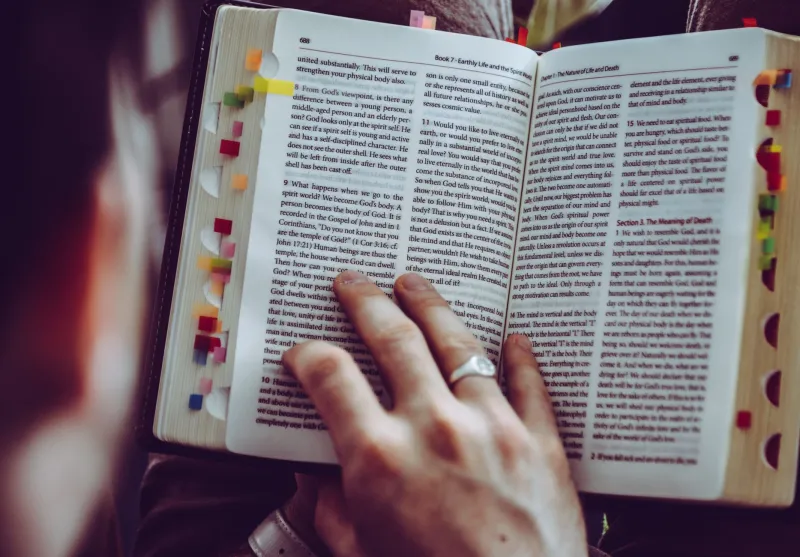
There is a particular flavor of comedic genius that requires setup. Not the kind you build in a paragraph or a scene, but the kind you build across an entire structural framework—the kind that requires a reader to first believe, truly believe, that they are holding something Important and Serious before the whole thing detonates in their hands like a very well-read grenade.
We are talking, of course, about books that weaponize the footnote.
Not just footnotes as asides. Not just footnotes as clarification. We mean footnotes as chaos agents. Citations as comedy. The scholarly apparatus—that whole elaborate costume of academic respectability—repurposed as the most elaborate setup for a punchline in literary history.
The Tension Is the Point
Here's what makes this particular trick work so beautifully: authority is inherently funny when it's wrong, misplaced, or slightly unhinged. There's something deeply satisfying about watching a text strain to sound credible while describing something utterly absurd. The footnote, with its tiny superscript number and its air of I have a source for this, is one of the most authority-coded gestures in written English. So when an author slaps a citation on a sentence about, say, the precise emotional devastation of a grocery store self-checkout machine, something electric happens in the reader's brain.
You laugh. But you also feel vaguely like you've been caught doing something.
David Foster Wallace understood this better than almost anyone. His footnotes in Infinite Jest are famous to the point of parody—long, digressive, occasionally more interesting than the main text, and structurally designed to make you feel like the book itself is trying to escape its own margins. They're not jokes exactly, but they create a comedic texture: the sensation of a very intelligent person who cannot stop talking, who keeps grabbing your sleeve as you try to walk away, who has seventeen more things to say and a citation for each of them. The humor isn't in the content alone. It's in the shape of the obsession.
Nicholson Baker and the Art of Overthinking Everything
If Wallace is the footnote's tragic poet, Nicholson Baker is its mischievous little brother. Baker's early novels—The Mezzanine in particular—are essentially extended footnotes to ordinary life. A man rides an escalator. A man thinks about the escalator. A man thinks, in extraordinary granular detail, about every object, sensation, and semi-relevant memory that the escalator has triggered, complete with footnotes that themselves spawn more footnotes.
It is, on paper, the least eventful novel ever written. It is also, in practice, one of the funniest things you'll read this decade, because Baker has understood something crucial: the gap between the scale of scholarly attention and the scale of the subject being analyzed is itself a comedic engine. When you bring the full weight of serious intellectual inquiry to bear on why paper straws are worse than plastic ones, you have not written a think piece. You have written a bit. A very long, very lovingly researched bit.
The joke isn't that the subject is trivial. The joke is that nothing is trivial to the person with a footnote for everything.
The Indie Underground Is Doing God's Work
Contemporary indie publishing has taken this energy and run absolutely wild with it. Self-published and small-press authors, freed from the editorial anxiety of legacy gatekeepers, have been quietly building a cottage industry of books that use academic scaffolding as pure comedic architecture.
Think mock-scholarly texts with real bibliographies citing fictional papers. Think self-help books formatted like peer-reviewed studies, complete with graphs that prove nothing and abstracts that contradict the conclusions. Think novels where the narrator's footnotes gradually reveal that the narrator is lying, unraveling, or possibly a completely different character than advertised—and where the academic apparatus is the only place the truth leaks through.
This is mischief at the structural level. It's not just a funny line. It's a funny system.
Why We Can't Look Away
Part of what makes this form so compelling right now is that we live in an era absolutely drowning in authoritative-sounding nonsense. The internet has trained us to recognize the aesthetic of credibility—the citation, the study, the confident declarative sentence—without necessarily being able to evaluate the substance underneath. Books that play with this tension aren't just funny. They're doing something slightly sneaky and important.
They're teaching you to read the footnote sideways.
When an author builds a text that looks serious and is serious—about craft, about character, about what it means to try very hard to explain something that resists explanation—but also makes you snort coffee through your nose at page forty-seven, they've done something genuinely difficult. They've made form and content fight each other in a way that produces light.
The best books in this tradition walk a razor's edge. Tip too far into parody and you've written a novelty item. Stay too earnest and you've written a very weird academic paper. The sweet spot—the place where the superscript number sends you to a footnote that is both genuinely illuminating and completely unhinged—that's where the magic lives.
Required Reading for the Footnote-Curious
If you want to tumble down this particular rabbit hole, here's where to start:
- David Foster Wallace, obviously. Start with the essays in A Supposedly Fun Thing I'll Never Do Again if Infinite Jest feels like too much of a commitment. The footnotes in those essays are doing their own entire performance.
- Nicholson Baker's The Mezzanine, which will make you feel like you've been handed a microscope and aimed it at a Tuesday.
- Terry Pratchett's Good Omens (with Neil Gaiman), which uses footnotes and asides to build a second comic layer underneath the already-comic main text, like a joke lasagna.
- Mark Z. Danielewski's House of Leaves, which weaponizes the scholarly apparatus to genuinely terrifying and disorienting effect—proof that this technique has range beyond comedy.
- Any number of small-press releases from the last five years that have been quietly, brilliantly losing their minds in the footnotes while the main text keeps a straight face.
The Bottom Line (Which Is Technically a Footnote)
The footnote rebellion isn't really about footnotes. It's about what happens when writers decide that the structure of serious literature is fair game—when the costume of authority becomes the material, not the disguise.
It's books that look you in the eye with a perfectly straight face and then, in tiny text at the bottom of the page, wink so hard they pull a muscle.
And honestly? We are here for every single superscript.


