Wanted: Dead, Alive, or Wildly Entertaining — Fiction's Most Lovable Criminals
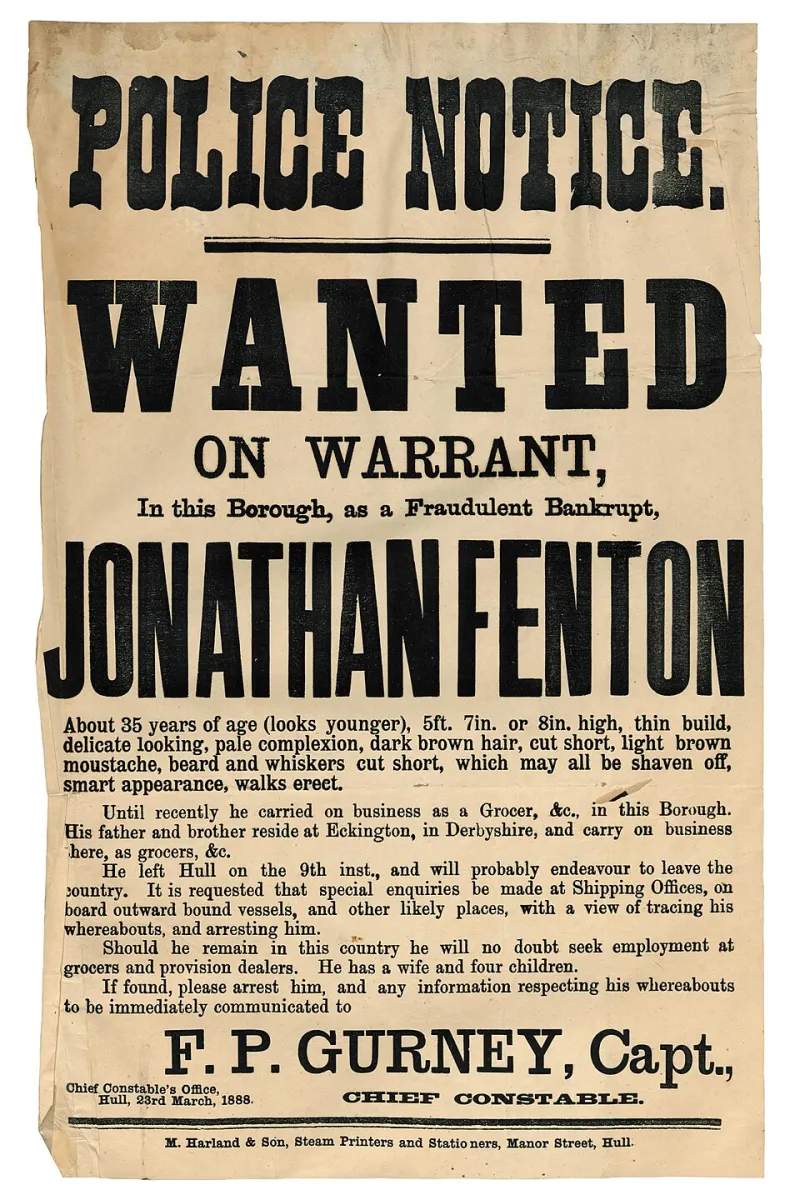
Photo: Nova Scotia Archives, No restrictions, via Wikimedia Commons
Let's be honest with ourselves for a moment. If your best friend called you up and said, "Hey, I just conned a room full of people out of their money, faked my own death, and stole a priceless artifact," you would not say, "Wow, I love your moral complexity." You would say, "What is wrong with you?" and possibly give the FBI a courtesy call.
But slap that same behavior between two covers and a snappy title, and suddenly we're staying up until 2 a.m., rooting for the guy with everything we've got.
Literature has always had a soft spot for scoundrels. From the very beginning of storytelling, authors have understood something that the justice system has not: charisma is a get-out-of-jail-free card, and a well-timed wink on the page is worth more than any alibi. The characters we love most are frequently the ones who should, by any reasonable legal standard, be doing fifteen to twenty in a federal penitentiary.
So let's drag them into the light, celebrate their crimes, and ask the genuinely uncomfortable question: why do we let them get away with it?
The Charming Con Artist Problem
Take Tom Ripley, Patricia Highsmith's silky, murderous protagonist who slouches through The Talented Mr. Ripley committing identity fraud, forgery, and at least two extremely premeditated homicides. The man is a walking felony. And yet readers — generations of them — have found themselves oddly rooting for Tom to just get away with it already.
Highsmith understood something crucial: competence is seductive. We don't root for Tom because we approve of murder. We root for him because he's good at what he does, and there's a lizard-brain part of us that respects excellence, even when excellence is pointed in a deeply illegal direction. Watching someone execute a scheme flawlessly, even a terrible scheme, scratches an itch that watching someone fill out tax forms correctly simply does not.
This is the con artist's gift to fiction. Characters like Becky Sharp in Vanity Fair, who manipulates her way up the social ladder with the focus of a chess grandmaster and the scruples of a raccoon in a dumpster, are compelling not despite their dishonesty but because of it. Thackeray gave us a woman in a world that handed her nothing and watched her take everything anyway. Is it fraud? Technically, yes. Is it also kind of inspiring? Reader, you know it is.
Thieves With Good Taste (And Terrible Judgment)
Then there are the literary thieves — and not the scrappy, desperate kind, but the audacious kind. The ones who steal for sport, for art, for the sheer gorgeous nerve of it.
Arsène Lupin, Maurice Leblanc's gentleman burglar, has been robbing the French aristocracy blind since 1905, and the man has never once faced meaningful consequences because he simply refuses to take the premise seriously. He's not a criminal; he's a performance. The theft is almost incidental. The real product he's selling is the story of the theft, and we are buying every single copy.
Or consider Autolycus from Shakespeare's The Winter's Tale, a self-described "snapper-up of unconsidered trifles" who pickpockets his way through the play with such cheerful transparency that the audience can't help but laugh. Shakespeare knew that a thief who tells you he's a thief and then robs you anyway is somehow funnier and more charming than an honest man. The audacity is the point.
The Moral Gymnastics We Perform
Here's where it gets genuinely interesting, because the reader's complicity in all of this is not accidental. Good authors engineer it deliberately.
The trick is almost always the same: give your criminal protagonist a worse enemy. Jean Valjean stole bread to feed a starving child, and Inspector Javert's relentless, joyless pursuit of him makes the law itself look monstrous. Suddenly we're not rooting for theft; we're rooting against cruelty, and the theft is just the vehicle. Victor Hugo didn't accidentally make us sympathize with a convict. He built the machinery of that sympathy with the precision of a Swiss watchmaker and the emotional brutality of someone who clearly wanted you to cry on a train.
The same mechanism powers Huckleberry Finn, where Twain takes a boy who lies, steals, and helps an enslaved man escape — all of which were crimes in antebellum Missouri — and makes the law and society's moral code look so bankrupt that breaking them becomes the only ethical option available. Huck's famous line, "All right, then, I'll go to hell," is one of the most celebrated moments in American literature precisely because he chooses his own conscience over the rules, and Twain has spent the entire novel making sure you're cheering him on.
Why Rule-Breaking Makes Better Stories
The uncomfortable truth that every good author eventually confronts is this: virtue, as a narrative engine, is boring. Not because goodness is bad — goodness is lovely, please practice it — but because goodness tends to reduce conflict. A character who follows the rules, respects authority, and behaves with consistent ethical integrity has, in narrative terms, taken most of the interesting options off the table.
The literary criminal, by contrast, is always in motion. Every choice creates consequences; every consequence creates more choices. The scheme has to escalate. The cover story has to grow. The walls close in, or they don't, but either way, you are turning pages.
More than that, these characters give us a safe space to rehearse transgression. We get to imagine what it would feel like to blow past the speed limit of social expectation, to take what we want, to refuse the role we've been assigned — and then we get to close the book and go make responsible choices with our actual lives. Fiction's great criminals are a pressure valve. They let us be bad for a few hundred pages so we can go back to being good.
The Verdict
So here's the ruling from the court of Mischief & Mayhem: not guilty, on the grounds that you made us love you too much to convict.
Literature's most wanted are its most alive. They scheme and steal and lie and charm because authors understand that the most interesting people — real or fictional — are the ones who refuse to color inside the lines. And if that occasionally means we spend an entire novel hoping a murderer doesn't get caught, well.
We'll take that up with our therapist.
In the meantime, we'll be over here rereading The Talented Mr. Ripley for the fourth time, rooting for Tom again, and feeling absolutely fine about it.